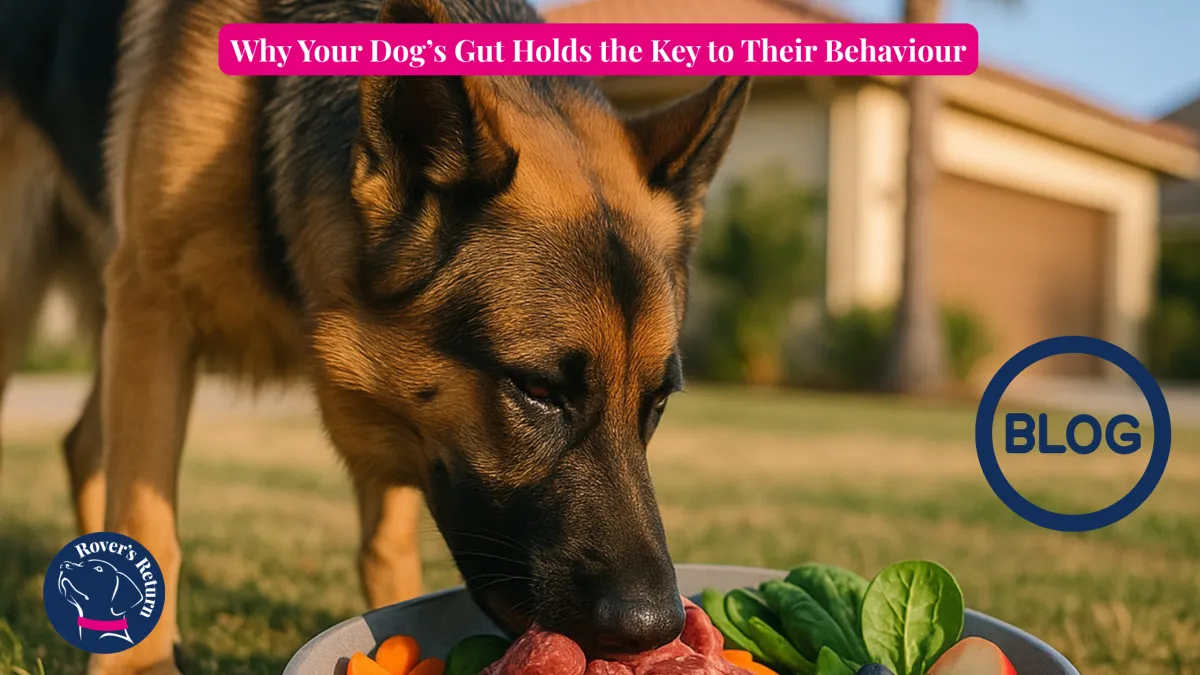
Why Your Dog’s Gut Holds the Key to Their Reactive Behaviour
The Second Brain: Why Your Dog’s Gut Holds the Key to Their Behaviour
We’ve all heard the phrase "you are what you eat", but for our dogs, this is more than just a cliché—it is a biological reality. Modern canine science is increasingly focusing on the gut-microbiome-brain axis, a two-way communication highway that links your dog’s digestive system directly to their emotional health.
If your dog is struggling with reactivity, anxiety, or hypervigilance, or allergies and gut issues, the answer might not just be in their training—it might be in their bowl.
What is the Gut Microbiome?
The microbiome is a vast ecosystem of trillions of bacteria, fungi, and viruses living in your dog’s digestive tract. When this ecosystem is balanced (homeostasis), it helps digest food, supports the immune system, and—crucially—produces neurotransmitters.
Did you know that roughly 90% of a dog's serotonin (the "feel-good" hormone) is produced in the gut? If the gut is inflamed or imbalanced, serotonin production drops, leading to a dog that is more impulsive, irritable, and anxious.
How Commercial Dog Food Affects the Gut
While convenient, many highly processed commercial kibbles can wreak havoc on a delicate microbiome:
High Starch/Carbohydrates: Many kibbles use heavy fillers like corn, wheat, or soy. These sugars feed "bad" bacteria, leading to an overgrowth that can cause systemic inflammation.
Ultra-Processing: Cooking food at extreme temperatures (extrusion) can destroy natural enzymes and beneficial bacteria, leaving the gut to work harder with fewer tools.
Synthetic Additives: Artificial preservatives and colourants can irritate the gut lining, leading to a condition often called "leaky gut", where toxins "leak" into the bloodstream, triggering an immune response that keeps the dog in a state of high cortisol.
The Behavioural Connection
An imbalanced gut (dysbiosis) sends "distress signals" to the brain. This manifests in behaviours that owners often mistake for "disobedience" or "aggression":
Hyper-reactivity: A lack of serotonin makes it harder for a dog to "bounce back" after seeing a trigger.
Inability to Settle: Chronic gut discomfort makes it impossible for a dog to find a restful sleep state.
Anxiety: High levels of bad bacteria are linked to increased cortisol production, keeping the dog in a "fight or flight" loop.
How to Support Your Dog’s "Second Brain"
The good news is that the microbiome is incredibly adaptive. You can begin supporting your dog’s mental health through their diet today:
1. Introduce Whole Foods
Even if you don't feed a raw diet, adding fresh, "living" foods to kibble can help. Think of steamed broccoli, blueberries (packed with antioxidants), or leafy greens.
2. Probiotics and Prebiotics
Prebiotics: These are the "fuel" for good bacteria (found in foods like chicory root or bananas).
Probiotics: These are the "good" bacteria themselves. Look for high-quality, canine-specific supplements containing strains like Bifidobacterium animalis or Lactobacillus acidophilus.
3. Fermented Foods
Small amounts of kefir or plain goat’s milk can introduce a diverse range of natural probiotics into the system.
4. Reduce Inflammation
Switching to a high-quality, grain-free, or minimally processed diet can lower the "noise" in the gut, allowing the brain to focus on learning and relaxation rather than fighting inflammation.
Final Thoughts
Training is essential, but it is only half of the puzzle. If your dog’s internal environment is in turmoil, they cannot be expected to remain calm in an external environment. By nourishing the gut, you are quite literally nourishing their mind.
Would you like me to draft a "Gut-Friendly Food Topper" guide you can share with your clients to help them get started?
Would you like a useful guide for gut-friendly toppers for your dog's food? Click here.

